
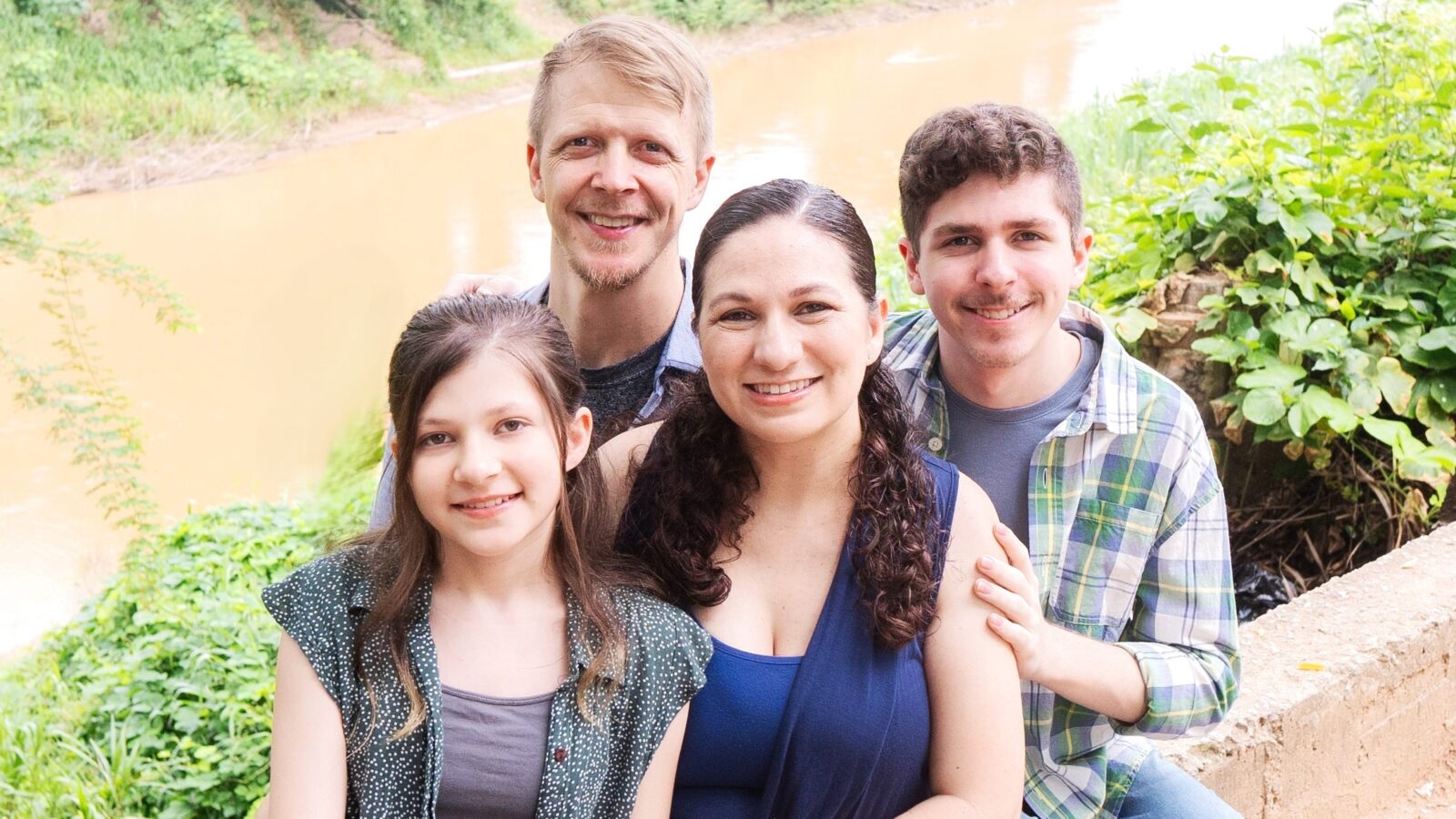
Describe your journey since graduating from Vanguard.
After graduating from Vanguard, we got married (2.5 weeks after) and began what we thought was a good 10-year plan. That plan included Karissa getting her teaching credentials, working, buying a house, going on the mission field for about 4 years, and then returning to the States to start a family. But God had other plans. After Micah couldn’t find work for three months, he cried out to God at a worship concert, where God asked him, “What about missions?” The next day we began the paperwork to become missionaries with AGWM. God continued to work on our hearts, including changing Micah’s heart toward missions personally. Eventually God led us from Costa Rica to Peru, and then to Bolivia, where there are no other North American missionaries but six indigenous tribal groups waiting to hear the Gospel.
What experiences as an undergraduate prepared you for your work in Bolivia?
Micah’s music ministry education helped prepare him for ministry—the Latin context expects those who are musically trained to participate in worship. The music theory and ear training allowed him to jump in even when no written music was available. Karissa majored in intercultural and urban studies and went on to receive her teaching credentials and Master’s in Education from Vanguard. Those degrees have helped open many doors. We were able to start the first Oral Bible Seminary in all of Bolivia, approved by both the Assemblies of God of Bolivia and the government. Karissa’s education gave her the correct wording to allow the proposal to be accepted at the national level as a valid form of education.
What does life look like in Bolivia as a missionary?

Where we live in Bolivia (Cobija), life is a mix of stepping back a few decades in time combined with only the most common of modern technologies. There are several wood plank houses with dirt floors where there may be little to no electricity, no refrigerators, and they still cook using wood. Just a few short houses away are other cement houses with more modern features: a few appliances, a refrigerator, tile floors, and maybe even a small air conditioning unit for the very rich. In the best neighborhoods, hexagon-shaped cobblestones are disrupted by tree roots and washed-out potholes, while in other neighborhoods, red clay streets are reduced to muddy ruts nine months out of the year when it rains almost daily.
Outside of Cobija is undeveloped jungle. Scattered villages are connected by dirt roads or river passageways. Those who live there are very resourceful and resilient: they hunt, fish, collect Brazil nuts, and farm. In these areas, although unreached by electricity wires and modern infrastructure, God is reaching through with the Gospel. Life becomes simpler and at times more beautiful when you realize that technology is not necessary for having joy, and that taking away distractions can bring you deeper into relationship with God.
Our life is spent between worlds. We come from a culture with ever advancing technology and access. Access to education, access to the internet, access to technology, and access to the gospel. We spend our time in Cobija in an area without access to many of these things preparing to go on trips into the jungle where there is even less access. We must be comfortable operating in places with extreme poverty and limited access to even basic health care. Although we constantly face situations of low hygiene, sickness, and poverty, we esteem everyone and show great love, honor, and respect, realizing that many have wonderful attributes and all are created in the image of God. It’s always important to keep the heart condition as the most important thing. One’s knowledge of God and their relationship with Him as their loving Father is always far superior to whatever earthly condition or situation.

Sometimes for us it can be lonely being in a place where no one was raised the same as you. We do miss some of the more modern conveniences. But life becomes simpler and at times more beautiful when you realize that technology is not necessary for having joy, and that taking away distractions can bring you deeper into relationship with God. He is just as present with them in their times of need as he is with us when we have seemingly all we need.
What is God doing in Bolivia through your family?
In the jungle, the majority of people are of oral cultures; everything they have learned was through oral processes. We take the Bible and condense it down to 3–5 minute stories, tell the story twice, and by the third recitation they can tell it back to us. They have now memorized God’s word and can share it with whoever they come in contact with. Through the Oral Bible Seminary, students travel from their villages, learn 12–20 stories over 3–5 days, take those stories back for 3–4 months, then return for another set. In this way they become pastors in their villages and can gain their pastoral credentials with the Assemblies of God of Bolivia.
What is your prayer for Vanguard?
Our prayer is that God will continue to use the education, professors, and community at Vanguard to train up Godly men and women who are ready to be obedient to God’s call on their lives to be witnesses in a dying world. That might look like professionals in a career in the States, but that might also look like missionaries using the skills that they gained at Vanguard to reach lost people in a foreign context.